
The words of the Heilige Bas Ayin, brought into everyday life.

Short videos, full shiurim, and written divrei Torah — all drawn from the sefer בת עין from Rabbi Avraham Dov of Avritch — and a window into the life of the tzaddik who wrote it.

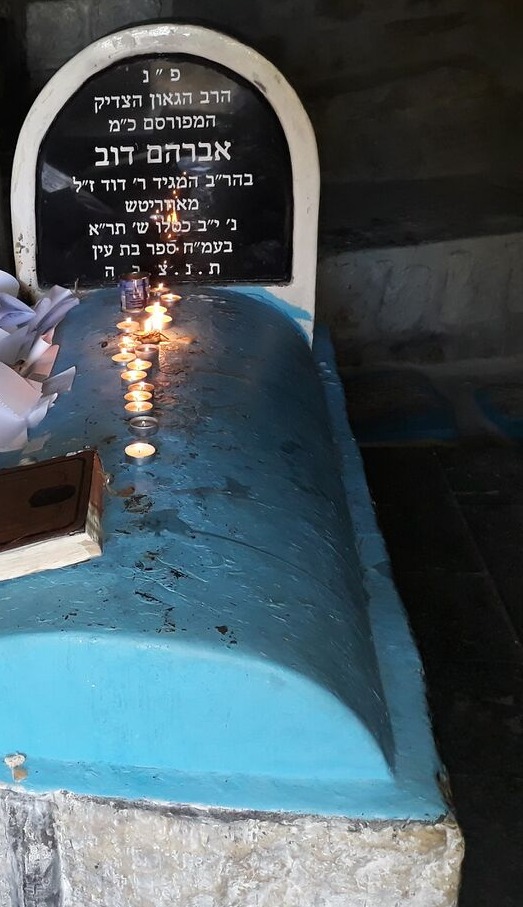
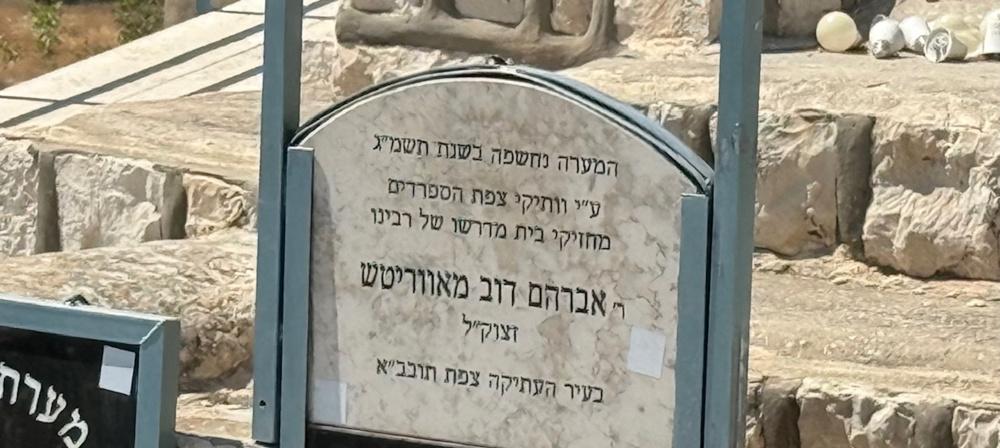
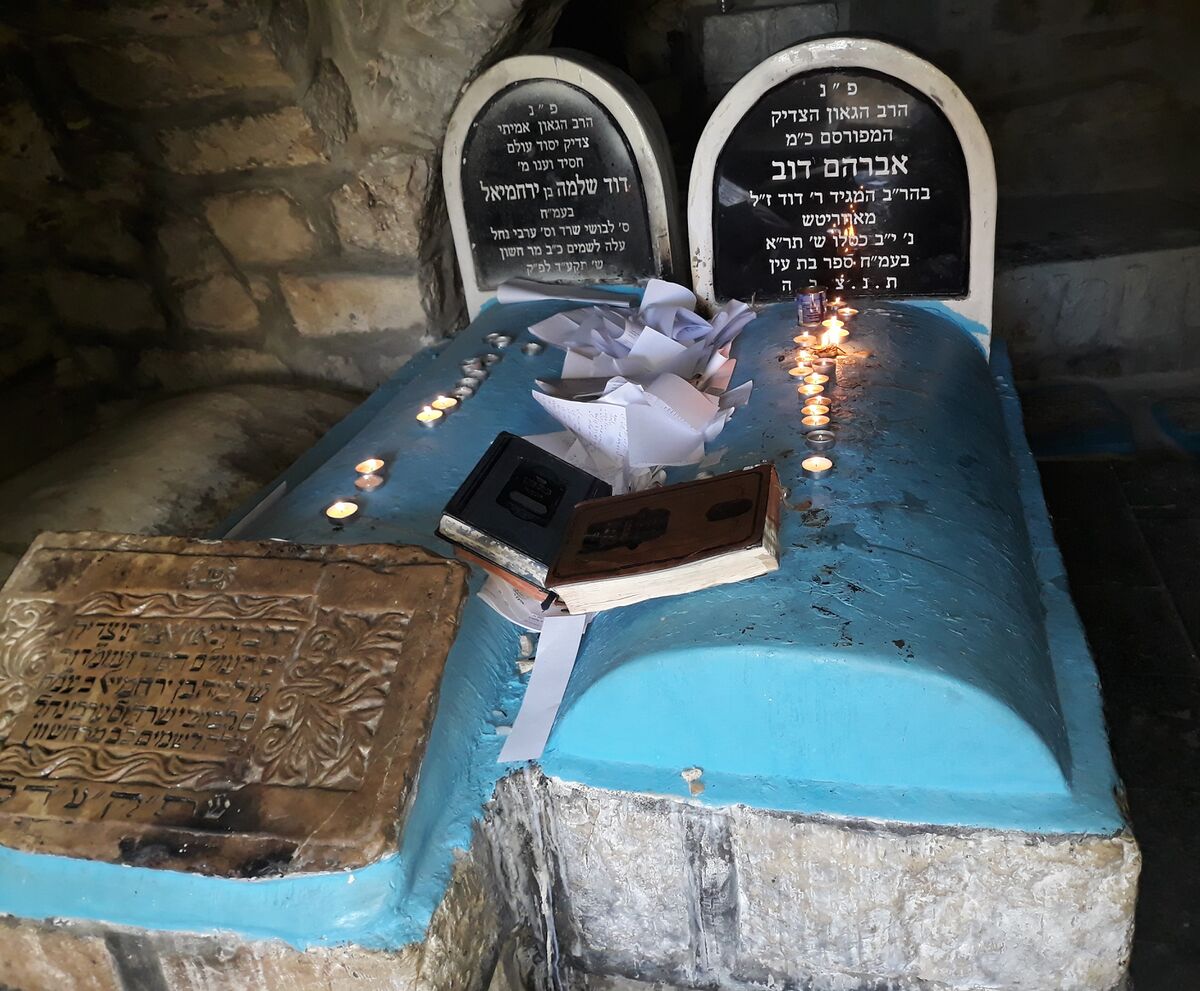
The matzeivah and blue kever of the Bas Ayin in Tzfas's ancient cemetery, with candles and kvitlach on the kever
The kever of the Bas Ayin in Tzfas — his matzeivah, "Avraham Dov… author of Sefer Bas Ayin," and the blue kever, with candles and kvitlach left by those who come to daven there. Photo via HaMichlol.
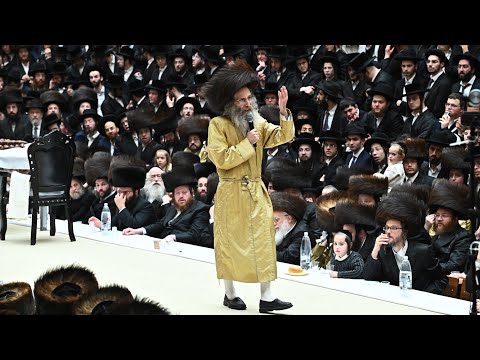
Seudas Bas Ayin — Motzei Shabbos, November 21, 2026 · Save the Date
–
Days
–
Hours
–
Minutes
–
Seconds

Hosted this year at The New Shul in Baltimore. Can’t be there in person? You can still be mishtatef — be part of the seuda — by partnering with a donation. On The New Shul’s donation page, select “Bas Ayin” in the dropdown.

Partner in the Seuda →

The Seuda

Seudas Bas Ayin

Divrei Torah and music from Seudas Bas Ayin celebrations everywhere — press play and enjoy! This page is a home for all of them: if your community marks the yahrzeit, send in your video and it belongs here too.

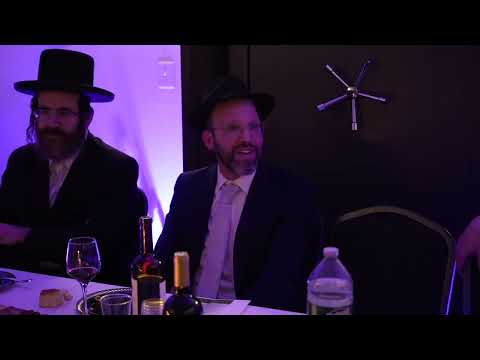
Yarhzeit Seuda, Baltimore — 12 Kislev 5785, with Rabbi Menachem Goldberger · part 1

Yarhzeit Seuda, Baltimore — 12 Kislev 5785, with Rabbi Menachem Goldberger · part 2

Yarhzeit Seuda, Baltimore — 12 Kislev 5785, with Rabbi Menachem Goldberger · part 3

Have a Seudas Bas Ayin video?

Held a seudah for the Bas Ayin’s yahrzeit — in your shul, your home, your community — and have it on video? This page is meant to gather them all in one place. Send in your video and we’ll add it to the collection.

Send in your video

Watch

The Shorts

One idea from the Bas Ayin in about 90 seconds or less — by R' Ori Strum.

Noach's Secret: Channel the Passion

Noach didn't look away from his generation. He saw their passion, desire and energy — poured into the wrong things — and asked how that same fire could be channeled toward kedusha.

Who Is a Real Apikores?

Not someone who denies Hashem — someone who believes that because he sinned, because he's low, Hashem is no longer with him. Hashochein itam besoch tumasam — He dwells with us even there.

Imitation Is the Highest Form of Connection

Avraham Avinu was the first to call Hashem "Adon" — a King exists only when there is a people who follow in His ways and are like Him. To imitate Him is to be connected to Him.

Lech Lecha: Go Toward the Kaf

Lech lecha — go toward the letter kaf, the prefix of likeness. Kaf hadimyon: we are meant to be ke — like Him. And that takes humility: becoming part of something far bigger than ourselves.

Listen & Learn

Shiurim/Classes

Full-length shiurim on the Sefer Bas Ayin, all in one place.

Reb Shlomo Carlebach

"The Amulet" — a Bas Ayin story · YouTube

YouTube →

Reb Shlomo Carlebach tells the story of the Bas Ayin's kamiah — the amulet the Rebbe carried with him on his journey to Eretz Yisrael.

Avi Fishoff

"A Message in Honor of the Bas Ayin's Yahrtzeit" · YouTube

YouTube →

A message in honor of the Bas Ayin's yahrtzeit.

Yehuda Geberer

"A Tzadik Arrives in Tzfas: The Life of the Bas Ayin" · Jewish History Soundbites

Listen →

A history episode on the Bas Ayin's life — his aliyah to Tzfas and his leadership of the city.

Heartfelt Prayer with the Holy Bas Ayin

A tefillah talk on the Bas Ayin · YouTube

YouTube →

A talk on heartfelt prayer with the Holy Bas Ayin.

Rav Shlomo Katz

"Toldot: Reconquering Eretz Hakodesh Today" · Podcast

Listen →

A shiur learning a Bas Ayin Torah, given in the run-up to the Bas Ayin's yahrzeit.

Rabbi Shmuel Silber

"Bas Ayin: A Necessary Failure" · Podcast

Listen →

A drasha on the Bas Ayin given at a yahrzeit seudah.

Rabbi Ori Strum

Bas Ayin for Life shiurim · TorahAnytime & YouTube

The Bas Ayin for Life shiurim — weekly classes on the Sefer, on TorahAnytime and YouTube.

Rabbi Moshe Tzvi Weinberg

"Bas Ayin" series · YUTorah

YUTorah →

A full series of 32+ shiurim working through the sefer, piece by piece.

Read

The Written Divrei Torah

Beautiful divrei Torah inspired by the Bas Ayin.

Parshas Bereishis

Trying to Reconnect

What is a broken heart? More than a jagged cartoon heart — it's a son just trying to reconnect. Following Sichos HaRan, Hevel's offering, and the Bas Ayin on the Shivrei Luchos, this piece shows how the feeling of distance from Hashem is itself a form of closeness — and how the whole Torah, whose first and last letters spell lev, heart, is one big broken heart.

Read the full dvar Torah

How do you define a לב שבור, a broken heart? I don't know about you, but when I hear the term "broken heart" my brain usually just conjures up a depiction of the classic red heart shape (which btw, does actually not look like a real human heart!) with a jagged line running down its center. Something tells me, though, that there is more to a "broken heart" than this oversimplified symbol.

As I sat down to write, I knew I wanted to discuss this topic of brokenheartedness, and so I began with what I thought was the perfect title: "Nothing as Whole as a Broken Heart." The truth is, I don't always begin my writing process with the title; often it comes at the end. Be it as it may, I began this piece with the title: "Nothing as Whole as a Broken Heart." Of course, this is not my own quote, rather it's a beautiful quote famously attributed to the Rebbe of Kotzk: אין דבר שלם מלב שבור — there is nothing as whole/complete as a broken heart.

For several minutes, I just sat by my computer, staring at the document open on my screen. The page was blank, with the exception of the title and a little blinking vertical line (called a caret, the text cursor) beckoning me to start writing. But I had too many questions. What is brokenheartedness? How can I express this idea in a language that resonates? Is it good or bad to have a broken heart? Suddenly, my internet connection was lost, albeit for a few seconds. In that span of time, a small pop-up appeared literally right on top of the "Nothing as Whole as a Broken Heart" title. It read: "Trying to Reconnect." The pop-up message quickly left, but the underlining message stayed with me and resonated deeply.

Maybe this is precisely what it means to have a לב שבור. It means: "I am just trying to reconnect." Reconnect to my soul-purpose. Reconnect to my true calling. Reconnect to Hashem, My loving Father.

I quickly changed the title to what you see now. It's true, there is nothing as whole as a broken heart. But what is a broken heart? It's the vulnerable feeling inside of just trying to reconnect.

In Sichos HaRan (42), Rebbe Nachman explains the fundamental difference between the negative middah of עצבות (sadness/depression) and the positive middah of לב נשבר (brokenheartedness). Depression is in the realm of anger and rage, like a complaint against Hashem for not fulfilling one's wishes. A broken heart, however, is entirely different. Rebbe Nachman describes it as: כבן המתחטא לפני אביו, כתינוק שקובל ובוכה לפני אביו על שנתרחק ממנו — like a child pleading before his father; like a baby crying and distressed because his father is far away.

A Son Just Trying to Reconnect

A son just trying to reconnect. That is what it means to be brokenhearted.

Dovid HaMelech taught an amazing thing: קרוב ה' לנשברי לב — Hashem is close to the brokenhearted (Psalms 34:19).

Brokenheartedness is a feeling of distance, but that feeling is actually closeness. Like the good old saying goes, "Distance makes the heart grow fonder." When a person feels distant from his father, he cries out to him for help; he yearns for closeness and connection. As such, the distance one feels in Avodas Hashem is actually a tremendously positive component to achieving intimacy and closeness with the Divine. Rebbe Nachman (Likutei Moharan, Tinyana 48) says a powerful line: ובאמת כל ההתרחקות הוא רק כלו התקרבות — the truth is that rejection/distance is really closeness.

Dovid HaMelech taught further: זבחי אלקים רוח נשברה, לב נשבר ונדכה — true sacrifice to Hashem is brokenheartedness (Psalms 51:19). We can offer a lot of things to Hashem. Big animals, small animals. Expensive animals, inexpensive animals. We can learn a lot of Torah, do lots of Mitzvos, and pray all the tefilos. But it's still entirely possible that the most important element is still missing: You!

Hevel Brought Himself

In Parshas Bereishis, the Torah says that both Kayin and Hevel brought a Korban to Hashem. But Hashem only accepted Hevel's offering. Because it was bigger and nicer? That cannot be, since we know that the size/niceness of an offering is inconsequential compared to the dedication and intent within a person's heart (מלבד שיכון את לבו לשמים). If you look closely at the pesukim, the Torah adds two words by Hevel's offering: גם הוא, also him. Maybe, just maybe, the Torah is hinting at this point. Hashem turned to Hevel and accepted his offering, because Hevel didn't merely bring an animal offering; he brought גם הוא, himself! He was being real, authentic and vulnerable. He was brokenhearted, feeling distant from his father, and wanted so dearly to come closer.

When it came to Kayin, the Torah says ויבא קין, but by Hevel it says והבל הביא. Notice the placement of their names, one is before and one is after the word "bring/brought." It's true, Kayin brought a Korban, but he was an afterthought. He did what "needed" to get done. He dotted the i's and crossed the t's. But he wasn't very present. Hevel, on the other hand, brought so much more. He brought himself. And that, my friends, is the single greatest offering a person can bring to Hashem: oneself.

Broken Vessels Let the Light Through

Avodas Hashem is different than any other type of "work." Usually, work demands a person to fix problems and create solutions. Fix, fix, fix! Avodas Hashem requires a person to break. To have a broken heart. To be humble, real, and authentic. To live with less ego. And guess what? Something amazing happens. Through this imperative middah of לב שבור, that is how we actually achieve and come to the greatest tikkun (fixing) of ourselves.

The Midrash (Vayikra Rabbah 7) shares a dramatic teaching: אמר רבי אלכסנדרי: ההדיוט הזה, אם משמש הוא בכלים שבורים, גנאי הוא לו, אבל הקדוש ברוך הוא, כלי תשמישו שבורים — Rabbi Alexandri said: The layman, if he uses broken utensils, it is demeaning for him. But the vessels of the Holy One blessed be He are broken.

We are Hashem's vessels, broken vessels. Real, authentic, and humble vessels. Vessels with no cracks/holes, cannot shine forth light. Only vessels that have cracks and breaks can allow light to pass through. A stone hearted person is dwelling in the abyss of darkness. A brokenhearted person, though, basks in the light of the Divine and becomes a conduit for dispelling that light yet further into the world.

The Bas Ayin: Yasher Koach on a Broken Heart

The heiliga Bas Ayin (Bereishis 1) explains that people don't stay on a spiritual high their entire lives; it's just not possible. We all have ups and downs, times of drawbacks and distance. But what do we do then? What is our approach? When Moshe Rabbeinu broke the Luchos, it represented the breaking of one's heart. And what happens? Hashem says: Yasher Koach! We see the tremendous advantage of living with a לב שבור, a broken heart. It's a good thing…Yasher koach!

That feeling a person has of being distant from Hashem is represented by the shards, the Shivrei Luchos, and gets placed in the Aron Kodesh. Their value is retained. It is beloved by Hashem. The person with a broken heart experiences a light that would not have been otherwise attainable. The Bas Ayin says an incredible thing: ולבחינה זו היתה רצון הבורא ברוך הוא בבריאת העולם — It was for this attribute [of a broken heart] that Hashem desired to create the world. This is because a person living with the humble authenticity of brokenheartedness results in an even stronger connection to Hashem.

The Torah Itself Spells Lev — Heart

I mentioned earlier the amazing quote from the Rebbe of Kotsk: "There is nothing as whole as a broken heart."

This year, as I was thinking about the idea of a broken heart, I began to wonder if the structure of the Torah itself is an expression of this very idea.

It is known (based on Tikunei Zohar) that the end of the Torah is connected to the beginning of the Torah, as it spells לב (heart). The last word of the Torah is ישראל and the first word of the Torah is בראשית, hence: לב. There really is no greater broken heart than this. Why? Think about it. A sefer Torah consists of 304,805 letters (how this fits with the Zohar who states there are 600,000 letters is a valid question, there are answers), which means that the letters לב that are formed from the beginning and ending of the Torah are actually separated by 304,803 letters! It cannot get more broken than that!

But maybe that's actually the point. Hashem created the world with the desire for this attribute of a broken heart. The entirety of the Torah is filled with stories, messages, and commandments. There are ups and there are downs. Moments of connection and moments of disconnection. Moments of loss and moments of joy. Moments of closeness and moments of distance. But it's perfect. The Torah is whole and complete. It is real and authentic. It's the way it's meant to be.

Everything in the Torah is subsumed within the context of the broken לב, the beginning and ending of the Torah. The Torah is one big broken heart. Because at the end (and beginning) of the day, there is nothing as whole as a broken heart.

Wherever we are in life, even (especially) during moments of distance, let us strive to be as real and authentic as we possibly can, and tap into the space and framework of "I'm just trying to reconnect."

Have a heilige Shabbos!
Questions/comments/feedback – [email protected]
Parshas Noach

No Student Graduation

The world graduates students; Yiddishkeit doesn't. A Jew stays a student for life — Ben Zoma's wise man, who learns from everyone, even a thief, as Reb Zusha did. And Noach, says the Bas Ayin, lived it first: he studied a corrupt generation and channeled its passion toward Hashem, turning darkness into light.

Read the full dvar Torah

The world views student graduation as the successful completion of a degree, course of study, or school program, or the formal event celebrating this milestone.

Yiddishkeit views student graduation as

Exactly my point. I left the space blank intentionally. Because in yiddishkeit, the concept of "student graduation" is just not a thing. Of course milestones are important. Celebrations to commemorate milestones are also important. But from the perspective of life, we are always meant to be growing and learning. We are always meant to be students; it's not something we graduate from!

One of the great mistakes in our history was the moment when we left Har Sinai. Not too long after having experienced the wondrous Torah revelation, the Jewish people left the area. Our Sages say they left "like a child running away from school." After the great spiritual experience of Matan Torah, the Jewish people perhaps thought they graduated. No more school! But guess what? This mindset was incorrect. Why? Because a Jew never leaves school. His whole life is school. He never has student graduation because to be a Jew means to be a perpetual and constant student.

In fact, the Hebrew term for a Torah scholar is תלמיד חכם (Talmid Chacham), which literally means: a student of wisdom. While the world views wisdom as knowledge, information, and power, our Torah teaches us that wisdom contains a much deeper and delicate truth. Wisdom is actually not-knowing. Like Rebbe Nachman teaches: תכלית הידיעה שלא נדע — the purpose of knowledge is to not know. A Jew lives with the humble recognition that "I am still learning."

Ben Zoma (Avos 4:1) shares a powerful five-word teaching: "איזהו חכם — הלומד מכל אדם — Who is wise? He who learns from everyone." If every person is meant to be your teacher, by definition it means that you are always a student. Student graduation is just not a thing!

You might ask, "Really?! Learn from everyone?!" The answer is yes. Ben Zoma says מכל אדם, from everyone!

"But wait, what about that criminal who just robbed a bank? You're not telling me that I have what to learn from him too, are you?!"

Even a Thief Can Be a Teacher

Again, Ben Zoma says מכל אדם, from everyone, which means that yes, even a bank robber can be our teacher.

In HaYom Yom (3 Iyar), the Lubavitcher Rebbe shares an unbelievable teaching: כל המדות, אף גם המדות הלא טובות, או גם רעות בשמן ושמותיהם, אפשר להשתמש בהם לעבודת ה' על פי התורה — All character traits, even those that are not good, or are even evil in name and description, can be used [as a lesson] in serving Hashem according to the Torah.

In this vein, the Lubavticher Rebbe then shares how the saintly Reb Zusha of Hanipoli learned seven approaches to his Divine service by pondering the work ethic of a thief: 1) a thief is modest, 2) he is prepared to endanger himself, 3) the minutest details are as important to him as greater considerations, 4) he labors with great exertion, 5) he works quickly, 6) he exhibits trust and hope, and 7) if he fails the first time, he tries again and again.

So yes, we can literally learn from everyone. We are never meant to graduate as students. There's always more to learn and grow and apply in our service of Hashem. One of the most important words in a Jew's life is "channel." There is nothing in this world that doesn't have meaning, purpose, and Divine energy. Even a "lifeless" rock is infused with tremendous spiritual energy and vibrancy, what we call חיות, vitality!

The G-dly Intellect in Everything

At the beginning of his magnum opus, Likutei Moharan (1), Rebbe Nachman teaches about the imperative of every Jewish person to find the G-dly intellect that exists in all matter: כי איש הישראלי צריך תמיד להסתכל בהשכל שיש בכל דבר, ולקשר עצמו אל החכמה והשכל שיש בכל דבר, כדי שיאיר לו השכל שיש בכל דבר, להתקרב להשם יתברך על ידי אותו הדבר — The Jew must always focus on the inner intelligence of every matter, and bind himself to the wisdom and inner intelligence that is to be found in each thing. As a result, the intelligence which is in each thing will enlighten him and draw him closer to Hashem through that very thing.

The world is filled with things. With stuff. The very things that so many people use to harm themselves, others, and the world, can be directed and channeled towards holiness, G-dliness, and spirituality. There is nothing on this world that is devoid of חיות אלוקית, a G-dly spirit. What we do with it and how we channel it is up to us.

Noach: Channeling Passion, Darkness into Light

The Bas Ayin (Noach 1) explains that this was actually the chidush of Noach HaTzadik. The world was in the realm of רבה רעת האדם, completely saturated with evil. The people of the world were going bananas, and as we all know, bananas are super slippery! The world was slipping away, falling to lowly levels never seen before since Creation. The average "Joe" walking the planet prior to the Flood was emphatic and passionately in love with the physical world. Noach saw all of this. He saw people deeply connected to the transitory lures of this world.

And so, he looked around, saw what was going on, and made a simple Kal Vachomer to himself, saying: "Wow, look at all this strength, passion, and energy that these people possess. Let me take that strength, passion, and energy and apply it to Torah and Avodas Hashem."

Noach didn't look the other way. He looked right at them. Not to copy their wayward ways, chas v'shalom, but to copy their energetic passion of misplaced דביקות and channel that energy accordingly.

The Bas Ayin further reveals that the numerical value of ישראל is the same as אור חשך, because the Avodah of a Jew is to transform darkness into light. To take the darkness of this world and apply it towards a holy purpose. Even more, says the Bas Ayin, the Roshei Teivos (first letters) of נח איש צדיק תמים is also the exact same gematria as ישראל, as אור חשך.

Because this was the chidush of Noach. He didn't look away. He didn't run away from "school." He humbled himself and became a student of the situation he was in. He became a student of the terrible people around him, and he asked a very simple question: How can I apply all of this stuff and direct it to Hashem?

My friends, if there is one takeaway message from all this, I believe it's this. Abolish whatever concept you have of "student graduation" from your life's dictionary, and live by the powerful dictum of Ben Zoma: Who is wise? He who learns from everyone.

Because when we approach life in this manner, always willing to be a student of this world, then we can be the chidush that Noach was in his generation. We will be able to direct and channel everything and anything towards our life's calling and purpose, connecting to Hashem in the most meaningful way we can.

Have a heilige Shabbos!
Questions/comments/feedback – [email protected]

Parshas Lech Lecha

Imitation Is the Highest Form of Connection

Imagine Erev Shabbos in your kitchen, a pot of chicken soup on the stove — and your two-year-old drops a dairy chocolate chip in. It's bateil b'shishim, nullified in sixty. The Bas Ayin takes that kitchen moment and builds a whole way of life from it: what it means to be mevateil ourselves to Hashem — and why Avraham Avinu was the first person in history to call Him "Adon."

Read the full dvar Torah

I hope you're doing amazing. I want to share with you an idea from the Heilige Bas Ayin.

Imagine you're there in your kitchen, Erev Shabbos Kodesh, cooking up a storm. And on the stove is a delicious pot of chicken soup. You're adding in the final touches, the final ingredients — a little bit of pepper, a little bit of salt, stirring it here and there. You put in some of those Osem croutons — why you put them in your actual soup pot, nobody knows other than you. But you're there cooking it away, and it's mamash almost ready.

And then your two-year-old comes into the kitchen, opens up the cabinet that's sitting on top of the stove — and a chocolate chip falls in. A dairy chocolate chip.

You know, we have this concept called bateil b'shishim. That is: if you have, let's say, a large chicken soup, and a little teeny bit of dairy falls in, it will be okay. This soup is going to be fine. Why? Because of this concept of bateil b'shishim. And this applies in other areas of kashrus as well.

But the concept also applies in life. Klal Yisrael is called shishim — shishim ribo, six hundred thousand. And there is an idea of being bateil b'shishim: of being part of the klal, of being mevateil yourself to the tzibur, of saying, "I'm in." And even in my personal avodah, of course I have to work — I have to work hard, being the best that I can. But there's an idea of being part of the tzibur, where Hashem overlooks certain individual specifics when we become part of the tzibur.

There's that concept, which can be an idea in its own right — and it is its own idea. But then there's this other idea that perhaps stems from here, and that is the concept of being bateil ourselves: of nullifying ourselves, becoming one with something that's bigger than ourselves.

So, yeah: we could be bateil b'shishim — being bateil ourselves to be part of the tzibur, that is the klal, and we tag along and join in all in the merit that is the klal. But there's another idea that I want to focus on, and that is the idea of being bateil ourselves to Hakadosh Baruch Hu. To Hashem.

Everybody has their own wills, their desires, their wants. But ultimately, the job of life is to align: what we know is the right thing, what we feel deep down, what we know is true — what is emes — to align our desires with God's desires. That's really the goal: to live in that realm of alignment. And that requires us to be mevateil ourselves.

I used to think the concept of bittul — self-nullification — was like a negative thing. It's mamash the opposite. It's the most positive thing. It's not negating oneself, that "I'm a nobody," and that "I'm less than." It's much deeper than that. It's that when a person nullifies his wants and his desires, and when a person is mevateil himself to that larger pot, to something bigger than himself — when a person is mevateil himself, nullifies himself, and he does that to Hashem — then the most amazing thing happens: he actually becomes bigger.

See, the little bit of dairy that goes into the fleishig pot: we view it that it's not even dairy anymore. It's now chicken soup. It's chicken soup.

You know, we're human beings. We're flesh and blood. And yes, we're given a soul, and we have a unique mission. The Hayom Yom makes the point that we're a cheilek Eloka mimaal mamash — a part of Hashem from above, literally. And "mimaal" and "mamash" are fundamentally opposites. Mimaal represents the ruchnius she'b'ruchnius — the spirituality of spirituality. And mamash represents the gashmius she'b'gashmius — the physicality of physicality. And that's the avodah of a Yid: to connect the two. And we have the capacity to do that.

Yes, we're human beings, flesh and blood. But we're given an ability to be mevateil ourselves, to nullify ourselves — not in a negative way, but to make ourselves bigger by negating the self. Now we become subsumed in creation. We become subsumed, in a good way, in the big chicken pot. We become subsumed in God's reality, in Hakadosh Baruch Hu.

That's an amazing thing, because we don't want to be small. We want to be big. And this is the quickest, easiest way to do that: to be mevateil ourselves, to liken ourselves to God by following what He wants us to do, by acting accordingly, by following in His ways. When we do that, we become so much bigger than perhaps we thought.

Avraham: The First to Call Him "Adon"

The Bas Ayin tells us, in this week's parsha, a beautiful idea. He says: Avraham Avinu was the first person to call Hakadosh Baruch Hu "Adon," a Master — to refer to God as a Melech. Ein melech b'lo am — there is no king without a nation.

Yes, God is the Creator. But that's sheayach to everything — that's relevant to all of creation. Not just humanity: God created the angels, and He created the mountains and the stars and the moon and the sun. God in the realm of Creator — that's true for every creature. And that's what He's called: a Creator.

But this term, this idea that God is a Melech, a King — there needs to be a people who connect to that God. Who connect to that King. Who emulate that King. Who are like that King. And that is the chiddush of Avraham Avinu. Avraham Avinu was the first to call Hashem "Adon," a Master. The Bas Ayin says that Avraham accepted upon himself the aspect of God's sovereignty, of the malchus of Hashem. But before Avraham, there was not a single person to whom it was sheayach — who called Him Adon, who referred to Hakadosh Baruch Hu as a Master, who related to this realm of kingship, of sovereignty — ki im al Avraham — except for Avraham.

A kingship, a kingdom, a King represents the fact that now there's a people who follow in His ways, who emulate God. It represents a relationship, a connection. Avraham Avinu understood that, and he was mechadeish this. And this is the Jewish people.

He says: there is only the plausibility of using this terminology of a Melech, a King, when there's someone that's dimyon — when there's someone that's acting like the King.

Animals act on instinct, right? Obviously, everything has a cheilek of Elokus, of godliness — we've mentioned this concept before. Everything has meaning. Everything has sechel, even a lifeless rock, of course. But it's only the person in particular, the Yid, that has the ability to appreciate Hashem as Melech. And therefore understand that "I'm the am." And therefore I can be mevateil myself and align my wills to Him. And I can be mevateil myself to the big chicken soup and become much bigger than my own little self. If I just remain isolated and levado — but if I'm willing to become bigger and open my horizons, then I can be adameh l'Elyon. I can be like the King. I can connect to Him. Avraham opted that. And that's the Jewish people.

And the Jewish people were given a special thing called Shabbos Kodesh. Shabbos represents that gift of malchus: "Yismechu b'malchuscha shomrei Shabbos" — those who keep Shabbos rejoice in Your kingship. It's that element of the Jewish people and God. It's specifically the Yid that's nikra Adam, that's called "Adam" — who's in the realm of "Adam," and the same letters of "Adam" can be arranged to spell "adameh," to be similar, adameh l'Elyon — that we have the capacity to relate to Kodesh, to relate to God, to copy Him, to emulate Him, to imitate Him, right? That's this concept of "Mah Hu rachum" — just like God is merciful, we are meant to be merciful. It's a Yid who has that capacity of adameh l'Elyon, to liken ourselves to God.

There's a quote that's often shared: that imitation is the sincerest form of flattery. Flattery is nice — "I admire you, great." But a higher level, a higher madrega, is imitation. When you imitate somebody — first of all, people often find it funny if you do a good imitation — but when you imitate somebody, you have a rebbe, a teacher, and you don't just listen to their classes, but you imitate their ways, that's the greatest thing that you can do. And we, as Yidden, have the capacity to do that with Hashem. He's merciful, He's good — all these attributes that we speak of God, we can tap into them.

Lech Lecha: Go Toward the Kaf

And that's Lech Lecha. Lech Lecha — go to yourself. But the Bas Ayin learns it a little bit deeper. Lech Lecha — go towards what? Kaf, the letter kaf. Why the letter kaf? Because the letter kaf — if you've learned grammar, Hebrew grammar — when you want to say the word "like," k', you put a kaf before the word; it's a prefix for "like." He says: Lech Lecha — lech, go — go towards the aspect of kaf, which is the b'china of kaf hadimyon, which represents the similarity, which represents the likeness, which represents imitation — k'. That we should be in the b'china of dimyon amiti, a true likeness. We are meant to be k'. We are meant to be adameh l'Elyon. So we're meant to liken ourselves to Hakadosh Baruch Hu, and follow in His ways, and be a giver of goodness, and do great things, because that's what God is. That's what Hakadosh Baruch Hu is. And when we tap into this ability to emulate Him, to imitate Him, that's the most amazing thing.

Lech Lecha — go towards kaf, that kaf hadimyon. And that requires kefifah. That requires humility. That requires hisbatlus. That requires that nullification. That requires you to say: "You know what, I want to be part of this bigger chicken soup of life. I want to become bigger than just my little self, because I am so much bigger. When I take that cheilek Eloka mimaal mamash — yes, I'm gashmi; yes, I am ruchni; I'm a mixture of both — but I can be mevateil myself and become part of that shishim, become part of something much, much bigger than myself."

Lech Lecha — go towards the kaf. And hopefully, we should all be zocheh to tap into this idea, and always strive towards that kaf — that kaf hadimyon — to liken ourselves to Hashem. And in whatever it is we're doing, every decision we make, to say: "Hey, is this a godly choice that I'm making? Is it bringing me closer, or is it bringing me further away?" If it's bringing you closer — go for it. If it's bringing you further — we're on our way.

Wishing you a holy and beautiful Shabbos!
— Ori Strum ([email protected])

Parshas Devarim · Tisha Be'av

Transforming Darkness into Light

The Bas Ayin's second piece on Devarim: Yisrael equals 541 — the exact gematria of or (light) and choshech (darkness) together — because our mission is to find the light hidden inside the dark. Gam Zu L'Tovah, the letter-switching that finds ratzah inside tzarah and nivchar inside churban, and the four fasts that add up to 26, Hashem's name of compassion: a Tisha Be'av teaching on turning darkness into light.

Read the full dvar Torah

The heiliga Bas Ayin (second piece on Parshas Devarim) teaches (based on Vayikra Rabbah 36:4) that the primary purpose of creation was for the sake of the Jewish people, whose job it would be to bring out the light amidst the darkness; to turn darkness into light — ויהפכו חשוכא לנורא. That is, through their studying Torah and performance of Mitzvos, the Jewish people would reveal/release/relinquish the sparks of holiness that are hidden/concealed/contained inside the kelipos (the shells that hide the interior light).

The Bas Ayin reveals that the very name ישראל has a gematria of 541, which is exactly the same as the value of the words אור and חושך (light | darkness), together. This alludes to the Divine mission of the Jewish people: to unearth and uncover the holy light that exists even in dark/impure/evil places.

No matter how dark/bleak a situation may appear, a Jew recognizes that there is always light; there is holiness and positivity. When experiencing times of judgement (דין/גבורה), the job of a Jew is to look at the goodness hidden in the darkness, as it says (see Berachos 54a): "A person is obligated to bless Hashem on the bad just like he blesses Hashem on the good." Because in truth and actuality, גם זו לטובה — even this seemingly bad thing is really good!

Gam Zu L'Tovah: Even the "Zu" Is for the Good

The Bas Ayin explains this concept based on a teaching from Rabbi Chaim of Krasni zt"l. The Tetragrammaton (the Name of Hashem that we use, Y-H-V-K) represents the attribute of compassion; it is the attribute of חסד. The Name Kuzu (כוזו), however, is the "backside" of the Tetragrammaton (the letters that come after yud, hei, vav, and hei are chaf, vav, zayin, and vav), which represents the attribute of harsh judgement; it is the attribute of גבורה. The first two letters of כוזו are כ (chaf) and ו (vav), which have the same value as Y-H-V-K (26). It turns out that the full name Kuzu, which is the attribute of Gevurah, exceeds the Name Y-H-V-K, which is the attribute of Chessed, by the letters זו (zu). This means that the letters ZU (זו) indicate harsher judgment than the other letters represent, since it is the hidden part of the "backside" Name of Hashem. This is the deeper meaning of גם זו לטובה: "Even this — even זו (zu), which is the attribute of Gevurah — is for the good!"

When Nachum Ish Gam Zu would go around saying "Gam ZU L'Tovah," he was expressing this idea: that even the ZU (זו, two letters that represent Gevurah) aspects of life have goodness and compassion within them.

This is what it means when we say in the first paragraph of Shema: "Hashem Elokeinu, Hashem Echad" — there are aspects of Y-H-V-K (compassion/chessed) and aspects of ELOKIM (judgement/gevurah), but ultimately, Hashem Echad — it's really all compassion!

Ever HaYarden: Remove the Harshness

The Torah tells us that the rebuke from Moshe Rabbeinu to the Jewish people took place בעבר הירדן (see Devarim 1:1) — "On the other side of the Jordan River." The Bas Ayin asks a fundamental question: The "other side of the Jordan" is not a clear identifying description of where Moshe was actually standing, because the "other side" is relative to wherever you are standing. So what is being expressed with the phrase "the other side of the Jordan"?

The Bas Ayin explains that the phrase בעבר הירדן (the other side of the Jordan) is — indeed — not indicating Moshe's location at that time, but rather it refers to the message that Moshe was conveying to the people. The word בעבר means להעביר, to remove. And the word ירדן comes from the word רידוי, striking/hitting, which represents the attribute of גבורה/דין (harsh judgment). Moshe was teaching the Jewish people a powerful message: Your job is בעבר הירדן — to remove the aspect of harshness and discover the goodness/light that is concealed beneath the surface!

Switching the Letters

In Eicha (2:1), we read the following pasuk that discusses the destruction of the Beis HaMikdash: השליך משמים ארץ תפארת ישראל — "Hashem threw the glory of Israel down from Heaven to earth." The Bas Ayin, however, sees this pasuk in a positive light. The word ארץ comes from the word רצון, as Chazal say: "Why is the earth called ארץ? Because the earth desired — רצה — to do the will of its Creator." When the pasuk says השליך משמים ארץ, it means: Hashem threw down from Heaven רצונו, His desire. What is that desire? His desire is for the Jewish people to discover Hashem's love and the good in every situation. His desire is for the Jewish people to transform darkness into light.

And how do we do this? Says the Bas Ayin, through היפוך צירוף אתוון — by changing around the order of the letters, from seemingly negative words into positive words.

There are times of צרה (distress), but a Jew can find the רצה — that which is good/desirable — beneath the surface. There are times of מרה (bitterness), but a Jew can find the רמה — that which is elevated/holy — hidden inside. There are times of נגע (negativity), but a Jew can find the ענג — that which is pleasurable — deep down.

A Jew is given the unique ability to switch the letters around and transform difficulty into positivity.

The Fasts Add Up to 26

The Bas Ayin reveals an astounding gematria based on the pasuk in Zecharia which delineates the various fast days. The pasuk says (8:19): צום הרביעי וצום החמישי וצום השביעי וצום העשירי — "The fast of the 4th (Shiva Asar B'Tamuz), the fast of the 5th (Tisha Be'av), the fast of the 7th (Tzom Gedalia), and the fast of the 10th (Asara B'Teves)." If you add the values of each month — 4, 5, 7, and 10 — you get a total of 26, which corresponds to the Name of Hashem — Y-H-V-K — that represents kindness and compassion. The fast days represent times of hardship and difficulty that befell the Jewish people. However, hidden beneath the surface — as always — is goodness/hope/positivity.

Churban Spells Nivchar: Chosen

On Tisha Be'av, we reflect on the חרבן, the destruction of the Temple. On the surface, it represents harshness/judgment/negativity. However, if we apply the same sacred challenge — to switch around the letters — we will discover that חרבן also spells נבחר, chosen. Beneath the dark surface, we understand that we are the עם הנבחר, the chosen people, and despite the loss of the Beis HaMikdash structure, we are still around!

In addition, as we read the קינות (kinot) and connect to the sadness of the day, there is positivity that exists beneath the surface. When rearranged, the letters of קינות can also spell תיקון, which conveys fixing and rebuilding. It also spells תינוק, which is a child — thus teaching us that beneath the bleakness and darkness of exile, we recall our relationship with Hashem. He is our Father (hence, Tisha Be'av is in chodesh Av, אב), and we are His children.

On this Shabbos before Tisha Be'av — Shabbos Chazon, the Shabbos of Vision — we connect to this unique ability of the Jewish people to see the positivity and holiness that exists beneath the dark surface; to transform darkness into light!

Good Shabbos!
— Ori Strum

The Tzaddik

The Bas Ayin of Avritch

Rabbi Avraham Dov (Ber) Auerbach of Avritch — known by the name of his sefer, Bas Ayin (בת עין). A prime disciple of the Chernobyl Rebbes, rav of Avritch for some forty years, and in his final years the leader of the Chassidic community of Tzfat. Everything below is drawn from published sources — the full list is collected in the Sources section at the bottom of this page.

c. 1760 · Khmilnyk, Ukraine

Born, and orphaned young

Avraham Dov was born in Khmilnyk, son of Rabbi Dovid, the town's rav and a noted maggid (preacher). His father died when he was about nine years old, and he was raised in his grandmother's home.

He himself used to tell a story from those years. After a Thursday night spent learning, his grandmother served him a special pot-roast lunch — and when he realized it was a reward for his diligence, it distressed him. His point in retelling it: fine food is not what makes a Rebbe.

Sources: Toldos Adam (family biography) · Ner Tzaddik

His Teachers

A disciple of Chernobyl and Berditchev

He became a close disciple of Rabbi Menachem Nachum of Chernobyl — his "prime disciple" — and of Nachum's son, Rabbi Mordechai of Chernobyl. He also learned from Rabbi Levi Yitzchak of Berditchev, and Rabbi Zusha of Anipoli is counted among his teachers as well.

The circle around him was wide: he was close with R' Zusha of Anipoli, the Ruzhiner, the Apta Rav (the Ohev Yisrael), R' Moshe Chaim Efraim of Sudilkov (the Degel Machaneh Efraim) and R' Aharon of Zhitomir, and friendly with the Baal HaTanya. His davening was fiery, like the Berditchever's — the very area seemed to shake.

Sources: Genazym · Kedem Auctions · Matzav · Ner Tzaddik

Avritch · Zhitomir

"The Holy Rabbi of Ovruch"

He married the daughter of Rabbi Nosson Nutta of Avritch — himself a disciple of the Baal Shem Tov — and succeeded his father-in-law as rav of Avritch, a post he held for some forty years. Along the way he also served as rav of Khmilnyk and as Av Beis Din in Zhitomir. In Avritch he became known simply as "the Holy Rabbi of Ovruch."

His father-in-law, R' Nosson Nota, had a custom of his own: to stay awake the entire Shabbos, guarding it like a watchman who may not sleep. The Bas Ayin quotes his father-in-law's Torah in the sefer — for example, on Parshas Devorim.

Sources: Kedem Auctions · Ner Tzaddik

1830s · Aliyah

Up to Tzfat

At about seventy years old he moved to Eretz Yisrael and settled in Tzfat (Safed), accompanied by some forty to fifty followers and families. His reasons were of a piece with his Torah: his love of the Land — he taught that Eretz Yisrael is the nekudah hapnimiyus, the innermost point, and championed Loshon Hakodesh, remarkable for the 1830s; his hope that the move would merit him a child; and his wish to have no part in the Chernobyl succession dispute he saw coming. In Tzfat there had been no resident Rebbe of stature for a generation, and he filled the vacuum — leader of the city's growing Chassidic community, in full partnership with Rabbi Yisrael of Shklov of the Perushim, helping to build the Ashkenazi kehillah and distribute the chalukah funds. He established his beis midrash — the Avritch (Bat Ayin) Synagogue, at the edge of the Old City near today's Alkabetz Street. His leading disciple there, Rabbi Shmuel Heller, succeeded him and became chief rabbi of Tzfat.

The choosing of Tzfat has its own story. He arrived in Elul 5593, courted by several cities, planning to settle in Yerushalayim; the Tzfat delegation persuaded him to stay with them at least through the Yomim Noraim. On Rosh Hashana, in the Arizal shul, before the shofar and a packed crowd, he said simply that today is Rosh Hashana and we must all do teshuvah — and the whole shul broke into weeping that held up the davening. In Tzfat he headed Kollel Volhyn, the central Chassidic kollel in Eretz Yisrael, held chief-rav and judicial authority over the region's Chassidim, and worked to unite the city's factions — Chassidim, Misnagdim and Sephardim alike.

And his first years in the Land were not easy. He wrote to Rabbi Mordechai of Chernobyl that his first three years in Eretz Yisrael felt like the three years of orla — he felt nothing, and even regretted coming — until, saying Kesser in Mussaf, the feeling finally came; then he regretted only that he had not come sooner.

Sources: Ascent of Safed · Zissil Encyclopedia · Belaaz · Jewish History Soundbites · Ner Tzaddik

24 Teves 5597 · January 1, 1837

The earthquake

When the great earthquake struck Tzfat during Mincha, the Rebbe gathered his congregation around him inside the collapsing shul — and the section where they stood remained standing. Everyone with him was saved. His cry as the tremors began: "Come to the Aron Kodesh if you wish to be saved!" — and in the rebuilt shul today, the line between the original surviving wall and the rebuilt sections can still be seen. The quake was the middle of three blows in four years — the 1834 Peasants' Revolt before it, the 1838 Druze revolt after — and through all of them his rallying cry was "Don't abandon the community." The full story is below.

Sources: Ascent of Safed · Kedem Auctions · Belaaz · Jewish History Soundbites

12 Kislev · Tzfat

His passing

He died in Tzfat on 12 Kislev, during the plague then raging in the city — and tradition holds that the plague stopped with his death, as he had foretold: he had promised he would be the plague's final victim. He had no children of his own; he called his sefer his child, and promised to intercede for all who learn it or help publish it. He is buried in a cave in Tzfat's ancient cemetery, alongside the Arvei Nachal and near the Beis Yosef and the Alshich — also buried in the same cave are Rebbe Nachman's daughter and son-in-law — and thousands gather for his hillulah on 12 Kislev each year, in recent years led by Rabbi Elimelech Biderman — who popularized the yahrtzeit seudah in Eretz Yisrael.

Sources: Daily Zohar — Tzadikim · Matzav · Belaaz · Ner Tzaddik

Inside the burial cave in Tzfas: the blue kever of the Bas Ayin with his headstone, the Arvei Nachal's headstone beside it, candles and kvitlach on the kever
Inside the cave in Tzfas's ancient cemetery, a little below the Arizal's: the Bas Ayin's kever, buried together with Rabbi Dovid Shlomo Eibeschitz, the Arvei Nachal, and Rabbi Aryeh Leib, a talmid of the Mezritcher Maggid. The cave is entered through a narrow opening — one must bend down low to go in, which the tzaddikim said itself teaches his humility. Photo via HaMichlol.
The marble sign at the entrance to the Bas Ayin's burial cave in Tzfas's ancient cemetery, inscribed in Hebrew with the name of R' Avraham Dov of Avritch
The sign at the entrance to the Bas Ayin's burial cave in the ancient cemetery of Tzfas. Its Hebrew inscription records that the cave was uncovered in 5743 by the veteran Tzfas Sephardim who restored the beis medrash of R' Avraham Dov of Avritch.

The Sefer

Bas Ayin — the Book

A classic of Chassidic thought: divrei Torah on the weekly parshiyos and the festivals — written in Europe, but only allowed into print once it came into contact with the air of Eretz Yisrael.

Why "Bas Ayin"?

בת עין

In his introduction, the author explains the name two ways: Bat Ayin has the same gematria — the same numerical value — as his own name; and the book carries within it the holiness of the Holy Land, the Land that rests under Hashem's constant watchful "eyes" (ayin).

And although the discourses were mostly said in the Diaspora, he infused them with the kedusha of Eretz Yisrael, the Land on which Hashem's eyes rest always — hence Bas Ayin, the pupil of the eye.

Sources: Kedem Auctions · Ner Tzaddik

Held back for the Holy Land

His disciples wrote down his teachings, and he edited the sefer carefully himself, after Rabbi Mordechai of Chernobyl instructed him to print it. But though the work was composed in Europe, he refused to let it be printed until he could re-edit and refine it in the air of Eretz Yisrael.

Sources: Kedem · Daily Zohar · Ascent of Safed

First printed in Jerusalem, 1847

The first edition appeared in Jerusalem in 1847 — six years after the author's passing — printed by R. Yisrael Bak, deliberately in Eretz Yisrael rather than the Diaspora, per the instruction of Rabbi Yisrael of Ruzhyn. A second manuscript tradition followed in Zhitomir (1850, expanded 1869), including Rebbe Aharon of Chernobyl's approbation blessing anyone who buys the sefer at full price with success "in all their dealings."

Sources: Kedem · Bidspirit — first edition

A segulah sefer

"It is said that learning it is auspicious for personal salvation (yeshuah)."

A popular explanation reads the title itself as an acronym of the pasuk יִשְׂרָאֵל נוֹשַׁע בַּה' תְּשׁוּעַת עוֹלָמִים — "Yisrael is saved by Hashem with an everlasting salvation" (Yeshayahu 45:17). A selection from the sefer on parshas Vayechi — on constant thanksgiving to Hashem as the channel of blessing — is widely studied as a segulah, traditionally followed by Mizmor L'Sodah.

There is a segulah that plays on the sefer's very name: a person who overcomes a test in guarding his eyes — his ayin — can make a "Bas Ayin seudah" in celebration, with music and dancing. It too is mesugal for yeshuos.

Sources: Genazym · Torah Wellsprings

Its spirit: humility & gratitude

At its core, the sefer teaches Hashem's greatness and human humility: Hashem owes us nothing — everything we receive is chesed, loving-kindness given freely and undeservedly. That awareness becomes gratitude, and gratitude becomes connection. A deep love of Eretz Yisrael runs through the whole sefer.

Sources: Jewish History Podcast — "The Man Who Saved Safed" · Jewish History Soundbites

From His Torah — Mei Merivah: Believe in Your Own Teshuvah

Hashem's charge against Moshe at Mei Merivah — "you did not believe in Me" — cannot mean that Moshe lacked faith in Hashem, the Bas Ayin teaches. What faltered was his faith in the power of his own teshuvah.

Moshe had called the people "rebels." He regretted it, and he repented — yet when the moment came to speak to the rock, he hesitated. His mouth, he feared, was tainted by those words; the rock would not listen, and the failure would bring Chillul Hashem. So he struck the rock instead. The Bas Ayin's lesson: teshuvah recreates a person. The mouth that sinned is not the same mouth after teshuvah. Had Moshe fully believed that his teshuvah had made him new, he would have spoken to the rock.

Source: Belaaz — "Who Was the Bas Ayin?"

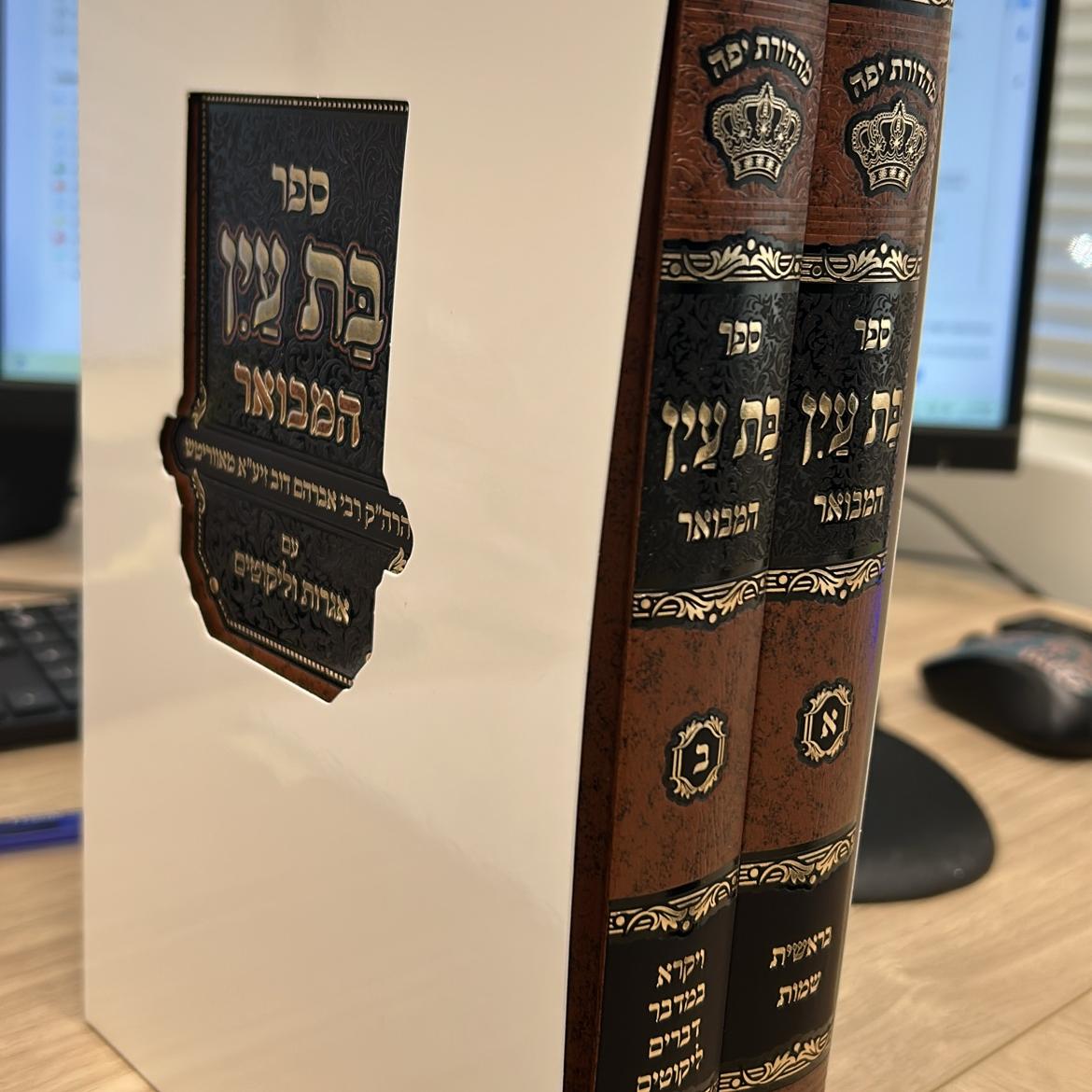
The two-volume Bas Ayin Hamevoar set in its slipcase, the gold-stamped title בת עין on the case and both brown spines
The sefer itself — Bas Ayin Hamevoar, the annotated two-volume edition, in its slipcase.

Stories

Stories of the Bas Ayin

Told and retold for close to two hundred years — here they are, as they have come down to us.

Tzfat · 24 Teves 5597 · January 1, 1837

The Earthquake Miracle

It was Mincha time when the great earthquake hit Tzfat — a disaster that took around 5,000 lives across the region, some 4,000 of them Jews. In the Bas Ayin's shul, the building began to come down around the congregation.

The Rebbe called out for everyone to gather around him: "Come to the Aron Kodesh if you wish to be saved!" He lay prostrate on the floor in prayer — and the part of the shul where they clustered remained standing while the rest collapsed. Everyone who was with him was saved. In some tellings, the congregants held onto his belt. A plaque at the shul commemorates the miracle to this day, and the line between the original surviving structure and the rebuilt portion is still visible.

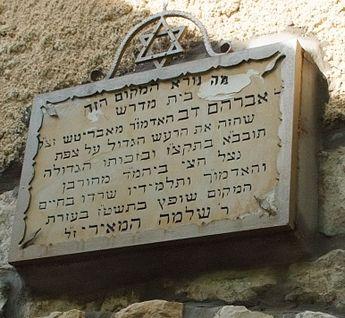
These are the words engraved on that plaque in the beis medresh:

"How holy is this place! The beis medresh of Reb Avraham Dov, the Rebbe of Avritz zt"l, who witnessed the great earthquake in Tzefas, 5597. In his great merit, half of the beis medresh remained intact, and the Rebbe and his students survived."
The commemorative plaque in the Bas Ayin's beis medresh in Tzfas, its Hebrew inscription recording the 5597 earthquake miracle
The plaque itself, in the Bas Ayin's beis medresh in Tzfas — commemorating the earthquake miracle of 5597, in the words quoted above.
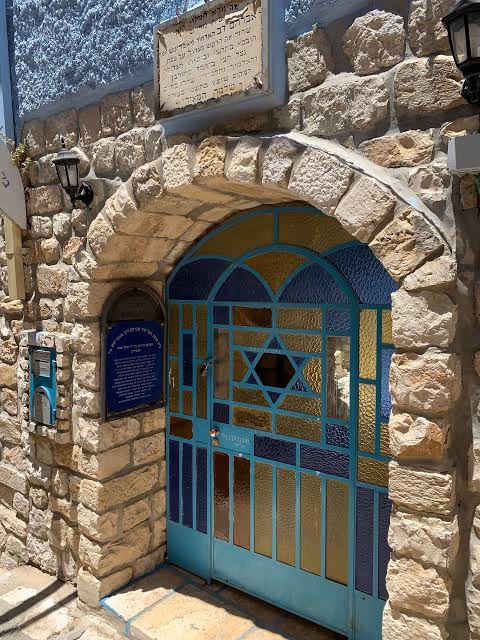
The stone facade and blue gate of the Bas Ayin (Avritch) shul in Tzfas, the commemorative plaque mounted above the gate
The Bas Ayin (Avritch) shul in Tzfas — the beis medresh he founded, still standing today. The plaque pictured above hangs over its gate.

Visitors today can still see it: the beis medresh ceiling stands at two levels, where half the roof was rebuilt.

Afterwards, he explained what he had seen, in his own words: "I saw the stones were falling sideways, not downwards — one wall throwing stones at the opposite wall. I understood the Samech Mem was executing this disaster, and the only protection is complete humility. That's why I fell to the ground." Total hisbatlus — submission to Hashem — shields a person from retribution.

From inside, it looked like this: he had everyone crowd in around him as he prostrated himself, spread out hands and feet (pishut yadayim v'raglayim). The dome mostly collapsed — yet the small area around him stood, two pillars left standing with the dome hanging above them. And afterwards he read the quake itself as a sign: ra'ash (earthquake) reversed spells sha'ar (gate) — a gate to redemption — and ra'ash and sha'ar share the gematria 570 with "Tzfas."

And when it was over, while many rabbanim and most of the Perushim left for Jerusalem, the Bas Ayin stayed. He sent messengers abroad to raise funds, dealt with the officials, distributed the relief strictly by need and damage — never by faction — and re-established the community of Tzfas, rebuilt on top of the mountain with space between the homes.

Sources: Ascent of Safed · Matzav · Kedem Auctions · Zissil · Belaaz · Torah Wellsprings · Dirshu — Kuntres Havineini · Jewish History Soundbites · Ner Tzaddik

Tzfat · 1838

"He Distributes Everything That He Has"

In a letter dated 13 Tammuz 5598 (1838), Dr. A. Loewy — secretary to Sir Moses Montefiore, who met the Rebbe in Tzfat — wrote home about him:

"One of the most learned and esteemed people I have ever seen… He distributes everything that he has to the poor of his people. There are always between 10 and 15 people eating regularly at his table."

His meeting with Montefiore in 1840 led to the beginning of modern Jewish agricultural settlement in Eretz Yisrael.

Source: Ascent of Safed — biographical note

Tzfas · Sivan 5598 · 1838

Saved During the Pogrom

In Sivan 5598, the Druze revolt against Ibrahim Pasha reached Tzfas, and for three days the city was given over to rampage. The Bas Ayin sheltered families in his beis medrash.

The attackers seized him and other hostages and dragged them to the castle stronghold, beat him, and demanded a ransom of 1,000 purses. He asked only for water to wash his hands, and accepted Hashem's judgment upon himself — and at that very moment word came that Ibrahim Pasha's soldiers were approaching, and the attackers fled.

This is one of two stories on this page from the same 1838 Druze revolt — see "The Baal Shem's Segula" just below; they are told as two separate accounts.

Source: Ner Tzaddik

Tzfas · the 1838 revolt

The Baal Shem's Segula: Shehakol in Danger

When the revolt came, the ruler offered the Bas Ayin a personal safe haven. He refused: "Wherever the Jews are, there will I be."

Captured and led toward death, he stopped the young men with him from seizing the attackers' swords, and asked instead for water — and said Shehakol with great kavana: a segula from the Baal Shem Tov for a time of danger. A respected Arab then shamed the rebels into releasing them. And days later, when a rumor spread that the Jews would be expelled, he told everyone to stay put — the ruler would leave first. Within days, the ruler was deposed and killed.

A second story from the same 1838 Druze revolt as "Saved During the Pogrom" above, told as its own account.

Source: Ner Tzaddik

Tzfat · 12 Kislev

The Plague That Stopped

In his final year, a plague raged through Tzfat. Tradition tells that the Bas Ayin foretold the plague would end with his own passing. His words were: "I'm the last victim of this plague. After me, no one will die." And so it was: he died on 12 Kislev, and the plague stopped.

He was laid to rest in Tzfat's ancient cemetery, in the cave of Rabbi Aryeh Leib of Vlotshisk, alongside Rabbi Dovid Shlomo Eibeschitz, author of Arvei Nachal. His kever is a place of tefillah to this day, and his shul still stands in the Old City — his chair, his Sefer Torah, the original Aron Kodesh and Bimah preserved inside.

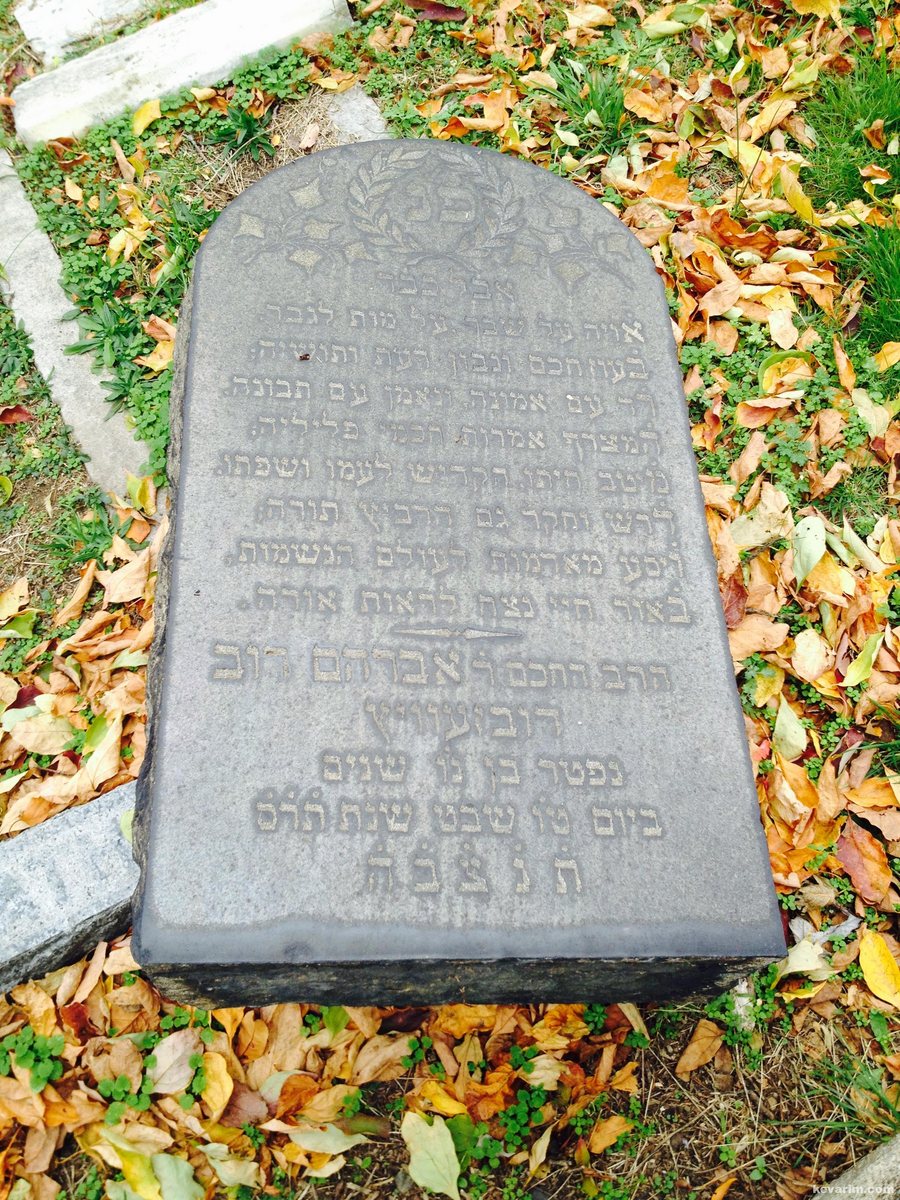
The carved matzeivah of the Bas Ayin in Tzfas's ancient cemetery, fallen autumn leaves around it
The matzeivah of the Bas Ayin in the ancient cemetery of Tzfas — "Avraham Dov of Avritch… author of Sefer Bas Ayin," niftar 12 Kislev.

Sources: Daily Zohar — Tzadikim · Zissil — Avritch Synagogue · Ascent of Tzfat — The Avreitsh Shul · Torah Wellsprings · Belaaz · Ner Tzaddik

On the way to Eretz Yisrael · Odessa

His Farewell at Odessa: Three Middos

When the Bas Ayin left for Eretz Yisrael, his chassidim accompanied him to the ship at Odessa — and asked him how they would stay connected to him across the sea. He answered: just as we connect to Hashem by emulating His middos, emulate the three middos he had trained himself in from his youth:

(1) Never to speak lashon hara. (2) Never to tell a lie. (3) To be distant from gaavah. "And we will remain united, as though face-to-face."

These three are primary themes of Sefer Bas Ayin itself — the sefer is his farewell letter, and his way of staying close. The farewell is also told as his leave-taking answer to a chassid, and it is traced to the introduction of the sefer, written by his nephew.

Sources: Torah Wellsprings — R' Elimelech Biderman, Vayetzei 5786 · Ner Tzaddik

A story he would retell

The Seudah of a Mitzvah

The Bas Ayin loved to retell this story about his own Rebbe. Rabbi Mordechai of Chernobyl once refused to be sandek at a bris unless there would be a seudah — and told the poor melamed who could not afford one to take an advance on his salary. "I will contribute as well."

The numbers fill in the picture: the father earned five gulden a week, and the week's wages were already spent. So the Maggid had him take an advance on his wages, to be deducted week by week — and the Maggid contributed toward the seudah himself. And he explained what was at stake: the thought that whispers "don't make a seudas mitzvah" is the Samech Mem himself — Samech Mem are the initials of seudas mitzvah.

And the Bas Ayin would add the words of the Malach Michael, who defeated the yetzer hara with a single argument: "You got them to do aveiros — but did you ever see them make a seudah to celebrate an aveirah? When a Jew does a mitzvah, look at the seudah he makes!"

It is a fitting story for a site that counts down to a seudah.

Sources: Dirshu — Kuntres Havineini, Vayeitzei 5784 · Ner Tzaddik

At the tish of the Meor Einayim

The Wondrous Hearing

At the tish of Rabbi Menachem Nachum of Chernobyl, the Meor Einayim, the young Avritsher would sit far from the Rebbe during the Torah discourse — yet edge closer when the Rebbe turned to ordinary conversation afterward. A chassid accused him of honor-seeking: Torah from a distance, but small talk up close?

The Meor Einayim defended him: the young man's ears were so refined that Torah reached him even from far away. It was the mundane talk that took effort for him to hear.

Source: Ner Tzaddik

His longing for the Land

The Holy Rocks and Stones

A shadar — an emissary from Eretz Yisrael — once told him that in the Holy Land even the roadside stones shine like diamonds. When he arrived and saw ordinary stones, he asked the shadar what he had meant. Only pure eyes see the gems, came the answer.

So he secluded himself and worked on the purity of his eyes, until he could see discarded stones shining like gems — and then he made a festive seudah of thanksgiving.

Source: Ner Tzaddik

A visit to R' Aharon of Zhitomir

An Eretz-Yisrael-dike Yid

He went to visit the sick R' Aharon of Zhitomir, a fellow talmid of the Berditchever. R' Aharon told him he would heal only with water from Eretz Yisrael — and revealed that he knew of the Avritsher's unspoken plan to move there: where a person's thoughts are, there he is. Water the Avritsher had mouthed was treated as the Land's own water — and R' Aharon recovered.

It fits the Bas Ayin's own vort on Vayishlach: Yaakov's messengers were malachim from the Land, for in his thoughts he was as if already there — a story told as tradition, as it has come down.

Source: Ner Tzaddik

Taking leave of the Chernobyl Maggid

The Broken Wheel: A Farewell Completed

Taking leave of Rabbi Mordechai of Chernobyl before the journey to Eretz Yisrael, all the Maggid's sons were present — except R' Aharon. On the road home, a wagon wheel broke; while they stopped to daven Mincha at nightfall, R' Aharon's coach arrived and joined them. The delay was Heaven's way of completing the farewell.

People said the fuss over the Avritsher was because of his love of Jews. R' Aharon asked: "I also love Jews — where do I find such Jews to love?" The Avritsher answered: that is exactly the difference — he already had such Jews.

Source: Ner Tzaddik

Tzfas · Chol HaMoed Sukkos

The Holy Women of Tzfas

He was still bound for Yerushalayim when, on Chol HaMoed Sukkos, he overheard a mother in Tzfas tell her son Yerachmiel to take the straw mats down from the roof — because after Shemini Atzeres the Yidden would daven for rain, and Hashem would surely send it at once.

That simple, certain emunah decided him: he cancelled Yerushalayim and stayed in Tzfas.

Source: Ner Tzaddik

Life in the Land

Hamotzi Lechem Min Ha'aretz

His family struggled with the Land's harsh conditions — yet he delighted in the Rebbetzin's coarse, hand-ground pitas, saying the bracha over the Land's bread with joy and sharing it around. The household said they never tasted better bread.

In a drought year he refused bread baked from imported grain. From Shemitta (Vayikra 25:20) he learned that the Torah stresses "our" grain — eating the Land's own produce is itself the point.

Source: Ner Tzaddik

Tzfas

His Talmid: Rav Shmuel Heller

Rabbi Shmuel Heller — the Bas Ayin's close talmid, who succeeded him as Rav of Tzfas — was also a physician, and his memories of the Rebbe have been preserved.

Once, foreign-alphabet letters kept intruding on Heller's davening. The Bas Ayin passed his handkerchief over Heller's forehead — and erased them. Another time, on Erev Yom Kippur, Heller skipped the seudah hamafsekes to go to the mikvah after treating a village sheikh; the Bas Ayin insisted on feeding him at his own house, and Heller said he never had a more elevated Yom Kippur. And when Heller once brought him a six-page teshuvah he had written, the Rebbe grasped it at a glance: "Believe me — Shemoneh Esrei just now was far harder for me than your teshuvah."

The last memory is a painful one. On his deathbed, the Bas Ayin summoned Heller to reveal Torah secrets to him — but Heller's rebbetzin, fearing the contagious plague, would not let him go. Heller regretted the lost secrets for the rest of his life.

Source: Dirshu — Kuntres Havineini, Vayeitzei 5784

Tzfas

The Rosh Chodesh Seudah — and the Guest from Teveria

In Tzfas, the Bas Ayin held a seudah every Rosh Chodesh, attended by many of the city's residents. One Jew from Teveria never missed it. The story goes that even after that man's passing he was permitted to attend — and the Rebbe kept him after the seudah for a tikkun.

It is the same idea: connecting to a tzaddik — hiskashrus — does not end with his passing.

"Tzaddikim in death are called alive," and learning a tzaddik's Torah, the Meor Einayim taught, is like davening at his kever. That is why a yahrtzeit seudah is held at all — and why it matters most for a tzaddik who left no children.

Source: Dirshu — Kuntres Havineini, Vayeitzei 5784

Eretz Yisrael · told by the Tosher Rebbe

A Yahrtzeit Seudah — and a Healthy Child

The Tosher Rebbe told of a family in Eretz Yisrael whose children were born ill. They made a lavish seudah in honor of the Bas Ayin's yahrtzeit — and afterwards they were blessed with a healthy child: a salvation "above the rules of nature."

And this is how the sefer was learned in the Steipler's home: his father, Rabbi Chaim Peretz, would wake the young Rabbi Chaim Kanievsky early every morning to learn Bas Ayin with him — for mussar and yiras Shamayim.

Sources: Dirshu — Kuntres Havineini · Torah Wellsprings

The segulah seudah · in our own time

A Seudah in His Own Home

Childless himself, the Bas Ayin called his sefer his child — and his kever has become a place of yeshuos. Each year R' Elimelech Biderman presides over the yahrtzeit seudah in Tzfas, and buses bring thousands from across Eretz Yisrael to daven at the kever.

There is a story of a childless young man from R' Meilech's Thursday-night chaburah — held in Reb Shloimke's dirah opposite the Mir — who was advised to host the Bas Ayin seudah in his own home the following week. The small group gathered there, and nine months later his first child, a daughter, was born.

Why the Bas Ayin, of all tzaddikim? A talmid suggested the key: nearly every vort in the sefer turns on hachna'ah — humility, submission to Hashem — the same hisbatlus that saved his shul in the earthquake.

Source: Ner Tzaddik — Segulos

Tzfas

Reb Shlomo Gross and the White Tablecloth

Reb Shlomo Gross was a poor Slonimer chassid, a kerosene seller in Tzfas. On the night of the Bas Ayin's yahrtzeit he davened at the kever — and that night the Bas Ayin came to him in a dream: "Why didn't you make a seudah in my honor?"

He gathered ten people around a white tablecloth, each one bringing something. Afterwards, he won a large lottery prize — and with it he funded an annual Bas Ayin seudah in the Slonimer yeshivos, with his conditions attached: a white tablecloth, divrei Torah, and stories of the Bas Ayin. The tradition continues today.

Source: Torah Wellsprings — R' Elimelech Biderman, Vayetzei 5786

At the kivrei tzaddikim

"Whoever Doubts the Mesorah…"

Once, visiting the graves of tzaddikim, the Bas Ayin heard a man ask: "Who says this tzaddik is actually buried here?" He answered: "Whoever doubts a mesorah accepted by Klal Yisrael is an apikores."

It is the other side of the word from Ori's Short above. There, an apikores is a person who believes Hashem has left him. Here, it is a person who doubts what Klal Yisrael has received and handed down. Both are failures of emunah — one in Hashem's closeness, one in His people's tradition.

Source: Torah Wellsprings — R' Elimelech Biderman, Vayetzei 5786

In our own time

Yeshuos Told Today

Yeshuah stories of our own day are still told in the Bas Ayin's name. A selection:

Two kallahs. A family learned Bas Ayin together every Shabbos and made an unplanned trip to the kever on 12 Kislev — and two daughters became kallahs; the third daughter's chasunah fell on 16 Kislev.

Fifteen bachurim. Fifteen bachurim took on a kabbalah connected to the sefer. Fourteen who kept it became engaged before the yahrtzeit. The one who mocked it did not — and afterwards begged for the story to be published.

Jersey City, 12 Kislev. On the morning of the supermarket attack in Jersey City, two men were kept away from the store — held back by a Bas Ayin seudah and l'chayim that morning.

Ask for great things. At the kever, the teaching in the Bas Ayin's name is "Harchev picha" (Tehillim 81:11), "Open your mouth wide": ask for great things, not small ones.

Source: Torah Wellsprings — R' Elimelech Biderman, Vayetzei 5786

Learn

Learn the Sefer

The whole sefer, open right here on the page — no need to go anywhere else. Pick a parsha and learn the Bas Ayin’s own words in the original Hebrew, in Sefaria’s edition of the text. (Sefaria’s edition is Hebrew only.)

Bereshit בראשית Noach נח Lech Lecha לך לך Vayera וירא Chayei Sara חיי שרה Toldot תולדות Vayetzei ויצא Vayishlach וישלח Vayeshev וישב Chanukah חנוכה Miketz מקץ Vayigash ויגש Vayechi ויחי Shemot שמות Vaera וארא Bo בא Beshalach בשלח Yitro יתרו Mishpatim משפטים Parashat Shekalim דרוש לפרשת שקלים Terumah תרומה Tetzaveh תצוה Parashat Zakhor דרושים לפרשת זכור Purim פורים Ki Tisa כי תשא Parashat Parah פרשת פרה Vayakhel ויקהל Vayakhel Pekudei ויקהל פקודי Parashat HaChodesh דרוש לפרשת החדש Vayikra ויקרא Tzav צו Shabbat HaGadol דרושים לשבת הגדול Pesach I פסח - חג ראשון Shabbat Chol HaMoed Pesach דרושים לשבת חוה"מ פסח Shmini שמיני Tazria תזריע Metzora מצורע Pesach II דרוש לפסח Achrei Mot אחרי מות Kedoshim קדושים Emor אמור Behar בהר Behar Bechukotai דרוש לפרשת בהר ובחקותי Bechukotai בחוקתי Bamidbar במדבר Shavuot שבועות Nasso נשא Beha'alotcha בהעלותך Sh'lach שלח Korach קרח Chukat חקת Balak בלק Pinchas פנחס Matot Masei מטות מסעי Masei מסעי Devarim דברים Vaetchanan ואתחנן Eikev עקב Re'eh ראה Shoftim שופטים Ki Teitzei כי תצא Ki Tavo כי תבוא Nitzavim נצבים Erev Rosh HaShanah דרוש לערב ראש השנה Vayeilech וילך Shabbat Shuvah I דרוש לשבת תשובה Rosh HaShanah דרוש לראש השנה Shabbat Shuvah II דרושים לשבת תשובה Ha'Azinu האזינו Yom Kippur יום כיפור V'Zot HaBerachah וזאת הברכה Sukkot סוכות Likkutim לקוטים Responsa שו"ת

Parshas Bereshit

בראשית This parsha on Sefaria →

Loading the sefer…

Sefer text: Sefaria (sefaria.org) — the full Hebrew text is embedded on this page.

Provenance

Sources

Every story and historical claim on this page is drawn from these published sources, collected here in one place.

  • Belaaz News — "The 185th Yahrtzeit of the Bas Ayin: A Legacy of Miracles and Yeshuos": belaaz.com
  • Jewish History Soundbites — "A Tzadik Arrives in Tzfas: The Life of the Bas Ayin" (Yehuda Geberer): jsoundbites.podbean.com
  • Dirshu — Kuntres Havineini, shiurim of Harav Shimon Spitzer, Vayeitzei 5784, "The Bas Ayin of Avritch" (PDF): dirshu.co.il
  • Torah Wellsprings — R' Elimelech Biderman, Vayetzei 5786, Bas Ayin sections (PDF): thelakewoodscoop.com
  • Ner Tzaddik — "Rav Avrohom Dov Auerbach zt"l (Bas Ayin)": profile, stories & segulos: nertzaddik.com
  • Kedem Auctions — biography & edition history of Bat Ayin: kedem-auctions.com
  • Genazym — manuscript biography & the segulah tradition: genazym.com
  • Ascent of Safed — biography & the earthquake story: ascentofsafed.com
  • Ascent of Tzfat — "The Avreitsh Shul" (Tzfat synagogues): myascent.org
  • Daily Zohar — Tzadikim: Rabbi Avraham Dov of Avritch: dailyzohar.com
  • Matzav — "Today's Yahrtzeits and History, 12 Kislev": matzav.com
  • Zissil Encyclopedia — the Avritch (Bat Ayin) Synagogue, Tzfat: zissil.com
  • Toldos Adam — family biography booklet: bat-ain.info (PDF)
  • Bidspirit — Bat Ayin, first edition (Jerusalem 1847): bidspirit.com
  • Jewish History Podcast — "The Man Who Saved Safed" (on the 2022 English translation): listennotes.com
  • TorahAnytime — the Bas Ayin for Life shiurim: #483987 · #485592